Publications
Proxy Datasets to Identify City Boundaries
16 June 2026
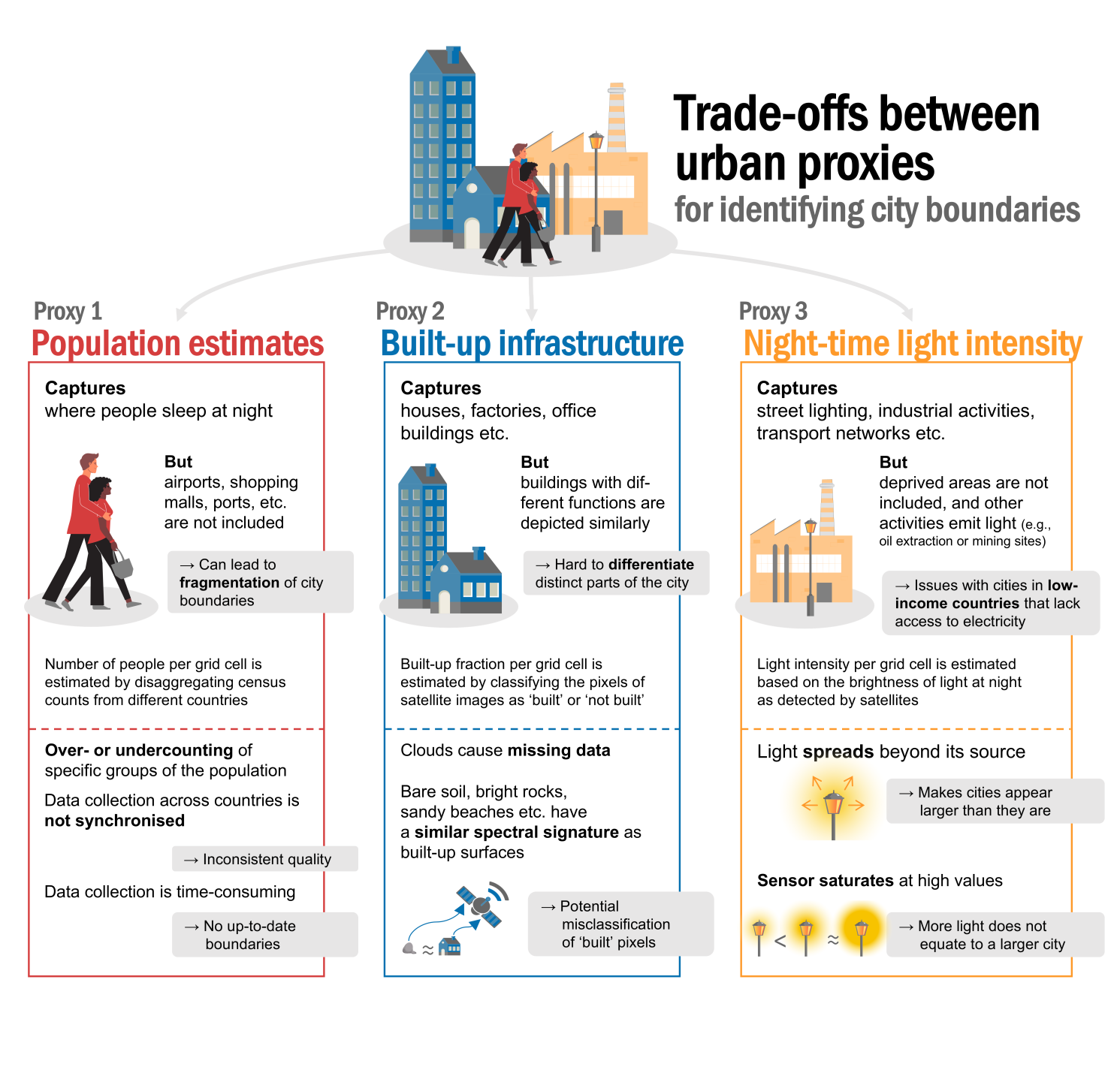
City boundaries can be delineated using various proxy datasets, such as population, built-up area and night-time lights. Each proxy reflects different assumptions about what constitutes a city, and each has its own strengths and limitations. How, then, can we determine the most appropriate proxy for a given application? Here we propose a framework to support researchers in selecting a proxy, and encourage them to be explicit about the rationale for their choice. We argue that... Read more
Identifying Potential Cross-Border Metropolitan Regions
14 May 2026
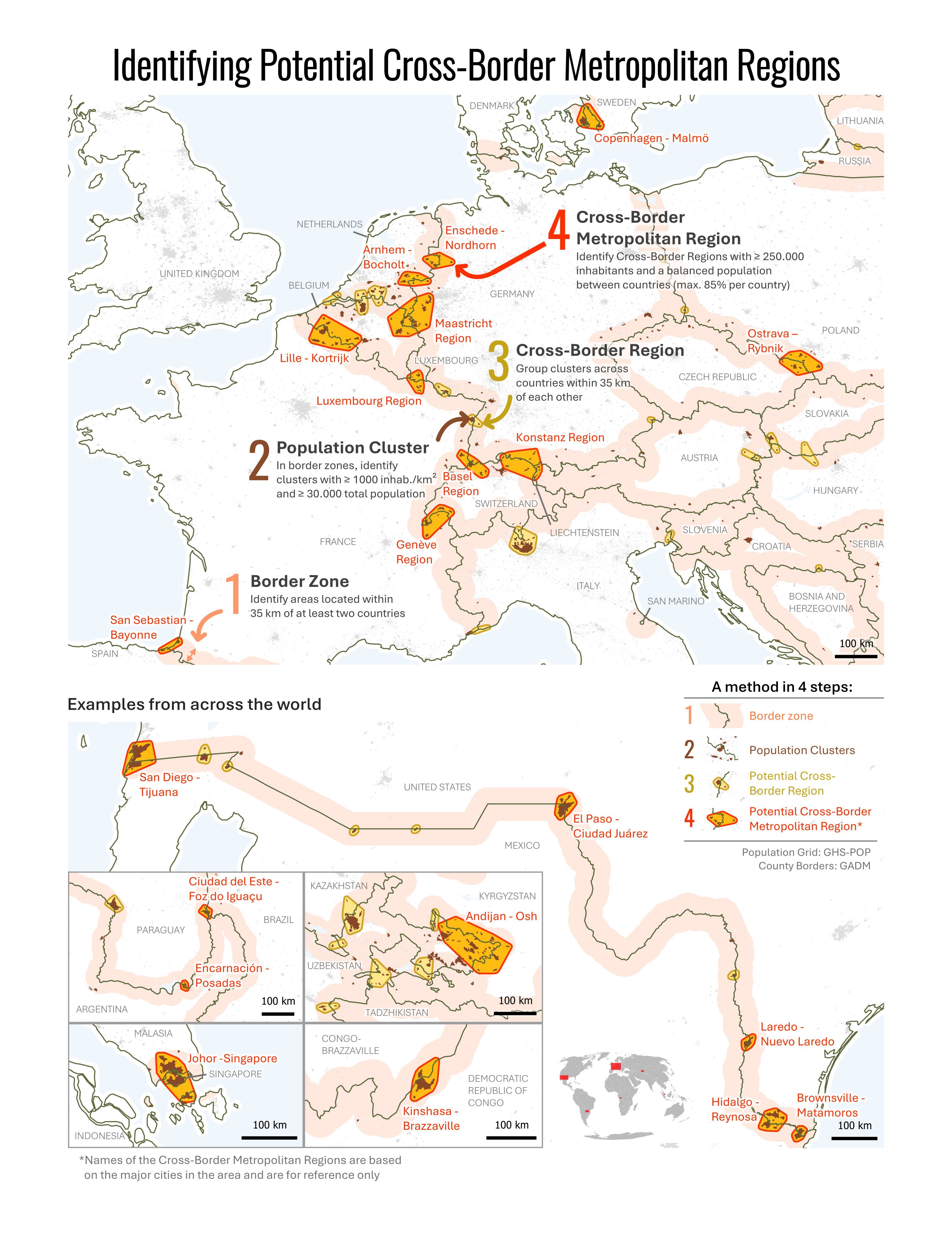
This contribution showcases visual storytelling as a tool for communicating analytical approaches. It outlines a methodology for identifying potential Cross-Border Metropolitan Regions (CBMRs). Potential CBMRs are defined as regions where significant urban populations reside across a border. Our approach is based on the assumption that particular spatial and demographic conditions create the potential for cross-border metropolitan dynamics to unfold. The regions identified re... Read more
From Fragmentation to Framework: Negotiating Urban Definitions
15 April 2026
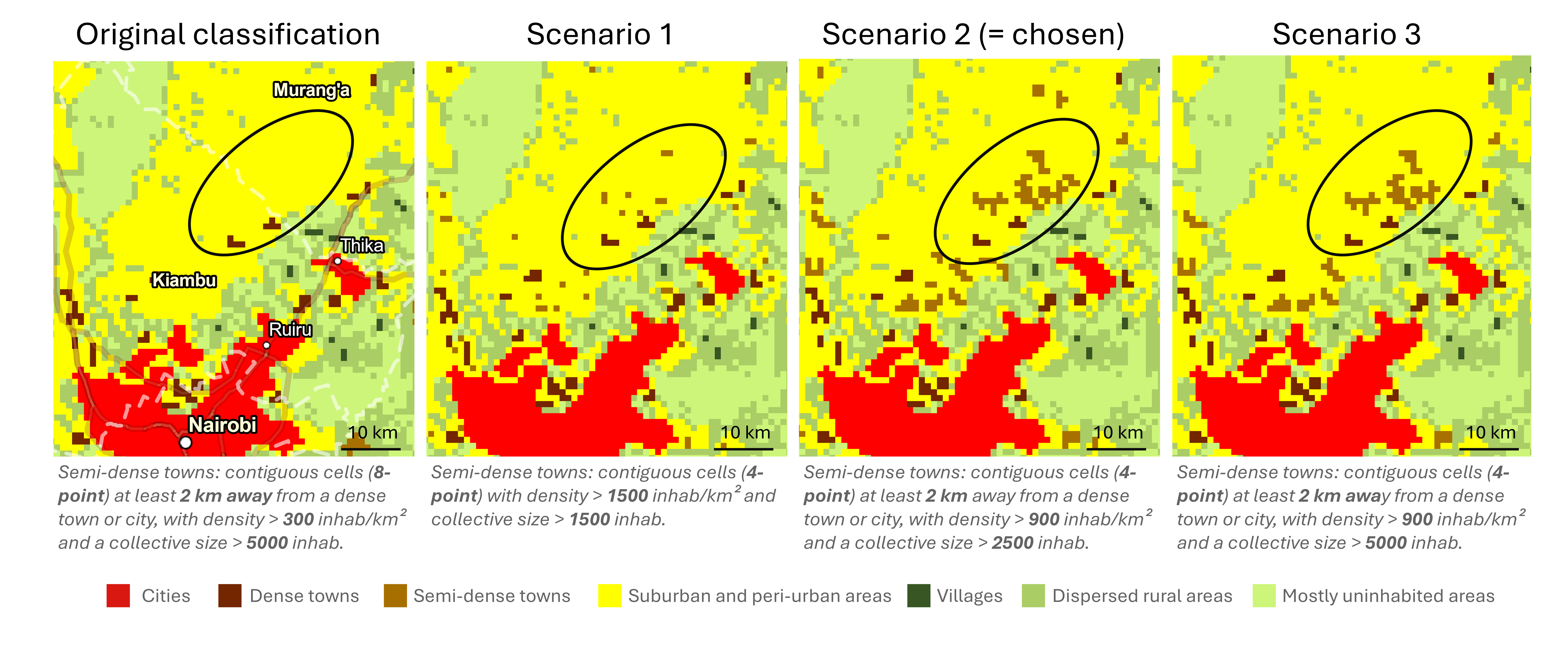
This article starts from the premise that purposefully working toward shared urban definitions can foster constructive dialogue across geographical and disciplinary boundaries. Yet, the process of standardisation is inherently power-laden and requires difficult work to navigate tensions between simplicity and diversity. Drawing on a qualitative interview study, we explore how an urban standardisation effort can be organised in practice: what the role of different stakeholders... Read more
An Urban Agglomerations Prototype Using the Degree of Urbanisation
17 February 2026
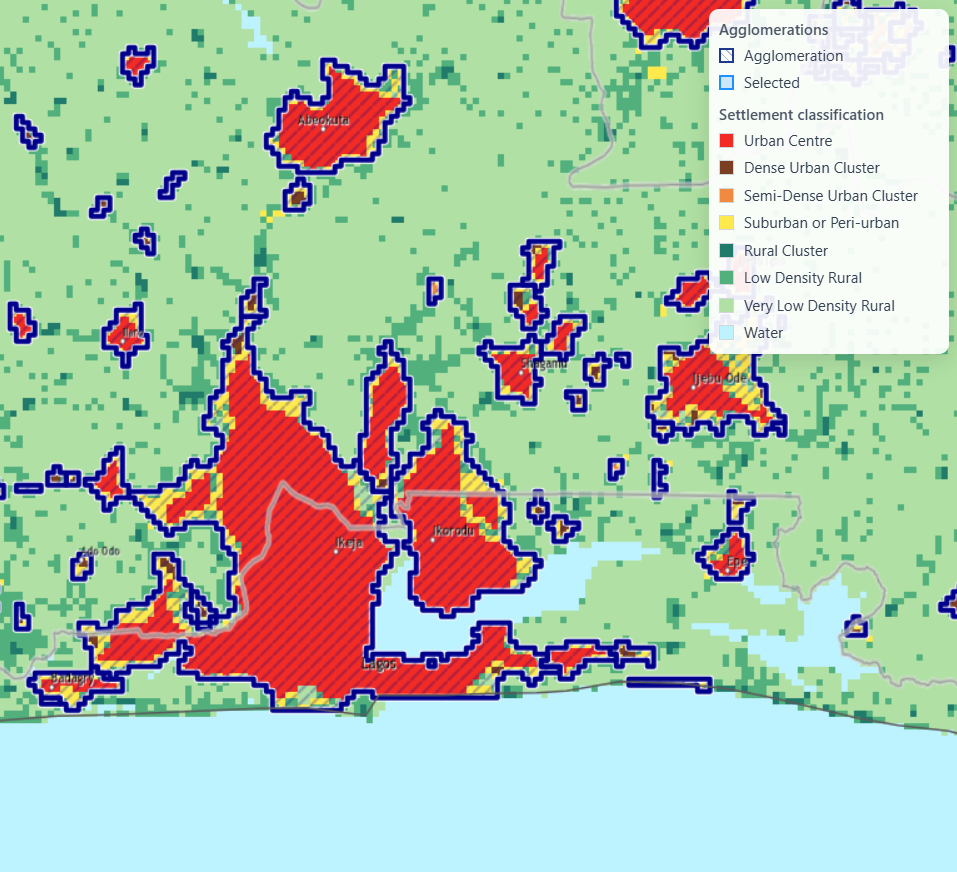
The Degree of Urbanisation (DEGURBA) is a globally harmonised framework for classifying cities, towns, suburbs and rural areas, which is widely used for territorial analysis and policy monitoring. However, it does not explicitly assign suburban and peri-urban areas to the cities and towns around which they are located. This report presents a methodology to delineate urban agglomerations (UAGGs) within the DEGURBA framework, enabling a coherent representation of urban systems ... Read more
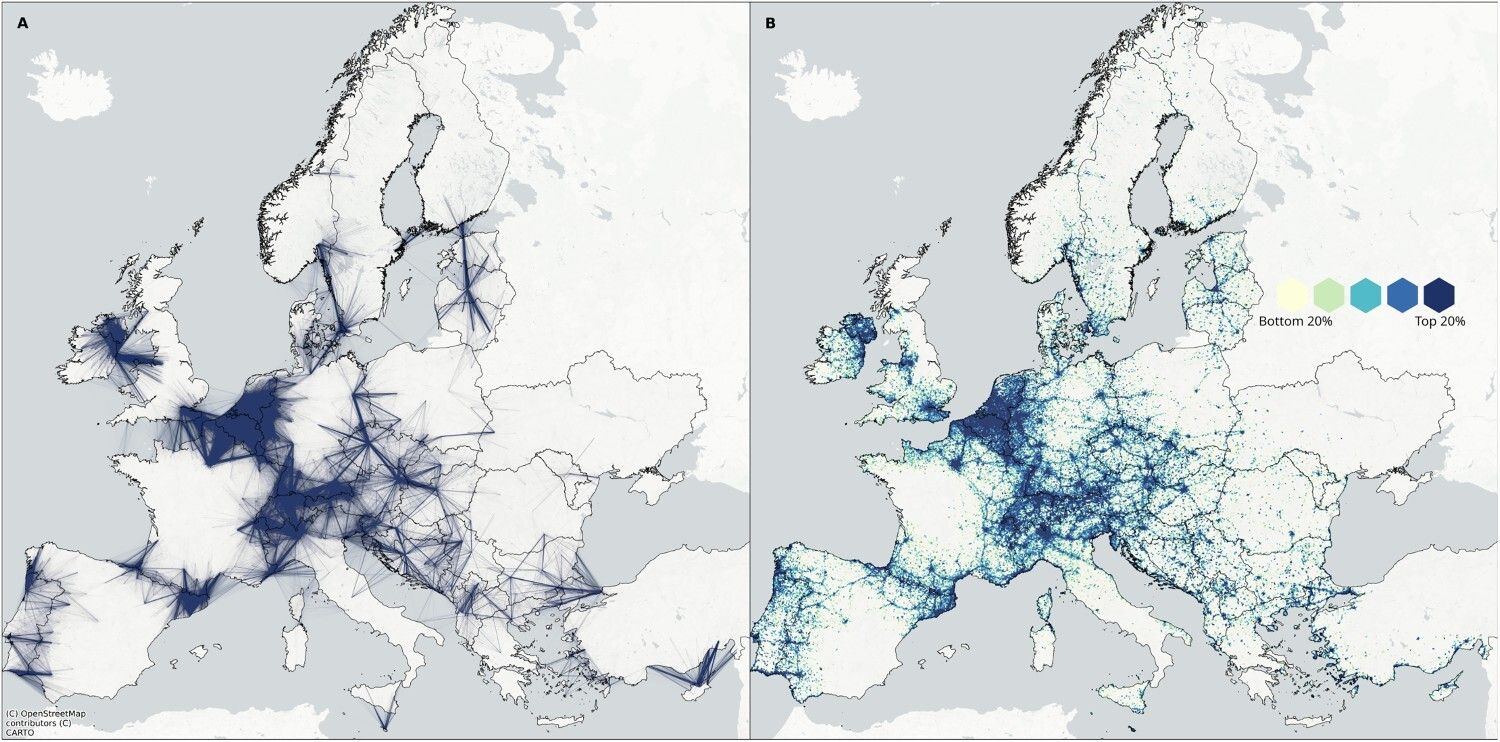
Reimagining Functional Cross-border Regions in Europe Through the Mobilities of People
31 January 2026
Cross-border interactions of people contribute to the (re)production of functional cross-border regions, yet they remain underexplored. We have addressed this by proposing a conceptual framework stemming from the mobility approach and mobile big data. Using geolocated social media data as a proof-of-concept, we empirically examined people’s mobilities across all the internal border regions in Europe. We distinguished between cross-border regions by their interaction character... Read more