Olena Hołubowska
Postdoctoral Researcher
Olena's research focuses on mobility within cities among residents with migratory backgrounds. This includes residential mobility as well as daily mobility, with a focus on questions such as experienced segregation, the types of public spaces that encourage intergroup mixing, and how visitors influence neighborhood dynamics. Her work is based on statistical analyses of data collected through mobile applications, complemented by surveys and census data.
Olena is now based at the University of Neuchâtel in Switzerland, where she examines new patterns of residential moves in Switzerland.
Olena was a PhD researcher at SAMBAL from 2021 to 2025.

Benoît, Céline, Juliette and Olena Receive the Social Study Early-stage Researcher Award
22 December 2025
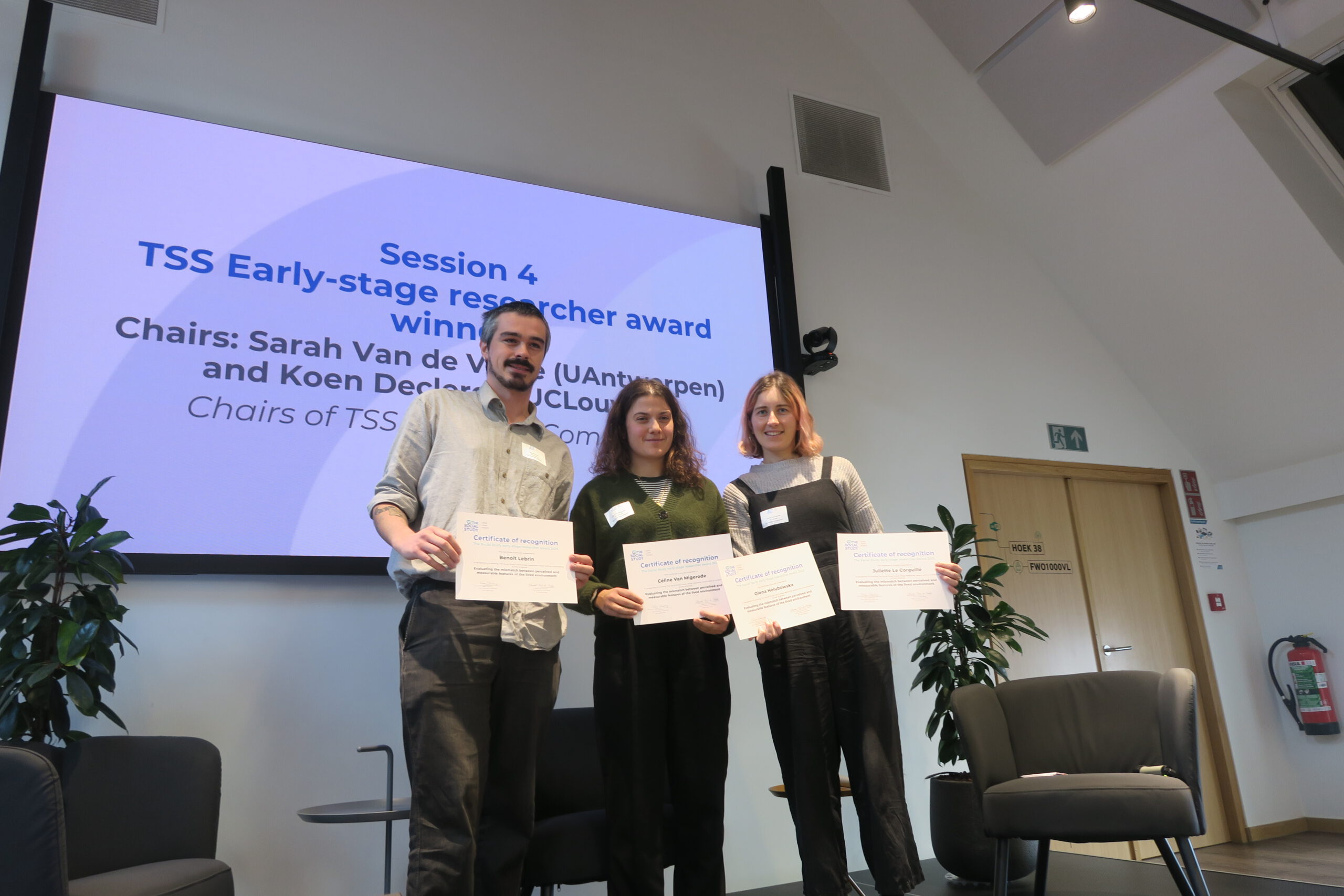
The Social Study (TSS) is a nationwide survey panel representing the Belgian population. Our team received the TSS Early-Stage Researcher Award, giving them the opportunity to ask questions to the panel.
At The Social Study Kick-off Conference, Juliette, Benoît, and Céline took to the stage to present the research proposal they developed with Olena. Their research will explore how people’s perceptions of their living environment compare to measured values. For example, do people’s perceptions of their neighbourhood as “urban” or “rural” match existing data-driven classifications? Or how well do perceived levels of diversity or accessibility align with statistical or GIS-based indicators?
We look forward to the next steps, and thank The Social Study for inviting us!
The Game of Gentrification at the Science Day
24 November 2025
Our team has been thinking for a while about different ways to communicate about geography and geographic research to a wider audience. To turn thinking into action, we built a digital game designed to explain the process of gentrification to both adults and children. We debuted the game at the Belgian Dag van de Wetenschap (Science Day), where visitors of different ages and backgrounds tested the game and learned more about the processes that shape neighborhood change. In the Game of Gentrification, players step into the shoes of different actors in a changing neighborhood. They explore what gentrification is, which actions can speed up or slow down the neighborhood’s potential to gentrify, and what the consequences might be.
Olena and Ate Co-author Research on Emissions Impact of Hypofractionation in Radiation Therapy
14 May 2025
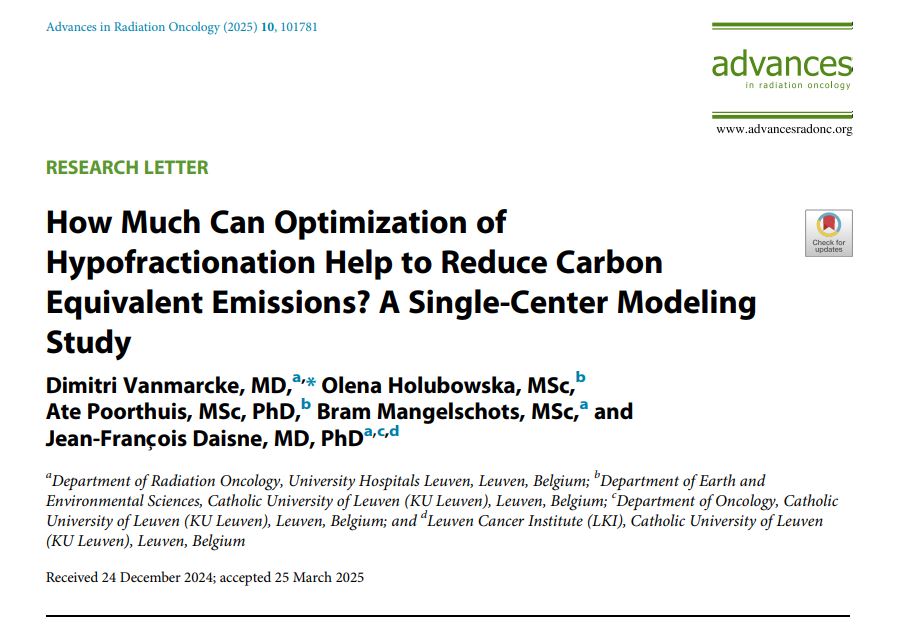
Olena and Ate recently co-authored a study published in Advances in Radiation Oncology titled “How Much Can Optimization of Hypofractionation Help to Reduce Carbon Equivalent Emissions? A Single-Center Modeling Study.” Led by Dimitri Vanmarcke and a multidisciplinary team, the research models potential reductions in carbon emissions through increased use of hypofractionated radiation therapy. Read the full article here: https://doi.org/10.1016/j.adro.2025.101781
Olena Presents at NUS Urban Analytics Lab
1 April 2025
Olena recently gave a talk on human mobility at the Urban Analytics Lab at the National University of Singapore (NUS). She presented alongside Andrew Renninger in a lunch session that brought together researchers working at the intersection of geospatial data, urban informatics, and mobility patterns. The event was hosted by Filip Biljecki and the UAL team.
Olena Presents on Mobility and Segregation at University of Auckland
24 March 2025
In the final week of her three-month research stay in New Zealand—funded by an FWO Grant for a long stay abroad—Olena presented her work in the School of Environment Seminar Series at the University of Auckland. Her talk, titled “Human Mobility & Segregation in Activity Spaces,” explored how everyday movement patterns in cities reveal intergroup exposure beyond residential boundaries. Drawing on mobile phone data and on-street surveys, her research shed light on the spatial dynamics of urban social interactions. The event also featured a presentation by Andrew Renninger, who discussed regularity and variability in global mobility patterns.